
Loading

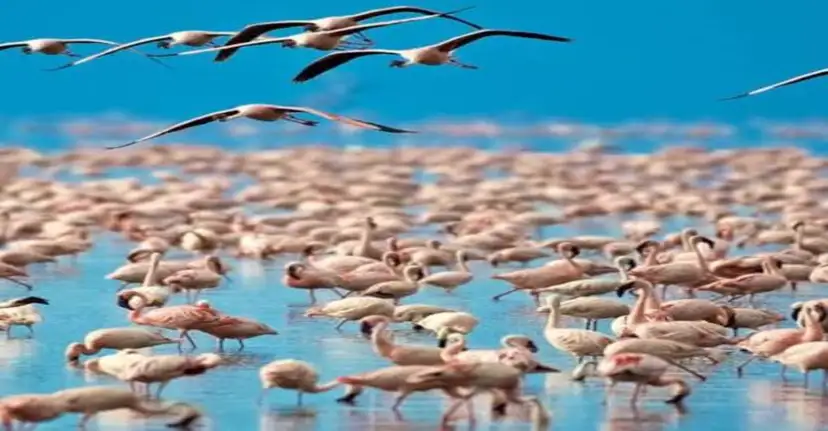
Lake Eyasi is a seasonal, shallow saline lake in northern Tanzania, situated along the Great Rift Valley southwest of the Ngorongoro highlands. Unlike the wildlife-focused destinations of the northern safari circuit, Lake Eyasi offers a different kind of journey: an opportunity to appreciate a changing natural environment while learning about the living cultures of communities in the surrounding region.
The lake’s water levels fluctuate significantly with rainfall. During drier periods, parts of the lakebed may become exposed, revealing pale mineral-rich surfaces and expansive views across the basin. When rainfall increases, the lake can expand, transforming its shoreline and attracting waterbirds. Palm trees, acacia woodland, scrubland and the surrounding escarpments add variety to the scenery.
A Lake Eyasi cultural tour in Tanzania is particularly known for community-arranged visits with the Hadzabe, an Indigenous hunter-gatherer people, and the Datoga, whose livelihoods include pastoralism and traditional metalworking. These experiences offer an opportunity to learn about different relationships with the land, food, craftsmanship and community life.
Watoto Wa Bingwa Safaris & Tours is a locally based Tanzania safari company operating since 2015. We help travellers plan thoughtful journeys that combine natural landscapes with meaningful cultural learning. At Lake Eyasi, we believe a rewarding visit should be guided by respect, informed interpretation and consideration for the people who choose to welcome visitors.
Lake Eyasi lies within the Eyasi-Wembere branch of the Great Rift Valley system. Its low-lying basin contrasts with the elevated landscapes of the Ngorongoro highlands and the surrounding plateau.
The lake is endorheic, meaning water flows into the basin without a permanent river outlet to the sea. Evaporation and rainfall therefore play important roles in determining its size and salinity. Its appearance can change considerably between seasons and from one year to another.
This seasonal character is central to the destination. Rather than expecting a permanent expanse of open water, visitors should understand Lake Eyasi as a dynamic landscape. Depending on recent rainfall, the shoreline may contain shallow water, wet margins, exposed lakebed or broad areas of salt-affected ground.
The surrounding vegetation also changes with local conditions. Acacia and scrub habitats provide shelter for wildlife, while palm-lined sections and wetland margins can support birds. The escarpment offers wide views across the basin, making it an interesting area for landscape photography and guided nature walks.
For travellers combining Lake Eyasi with Ngorongoro Conservation Area or Serengeti National Park, the contrast is particularly valuable. Here, the emphasis shifts from searching for large mammals to understanding the relationship between people, seasonal resources and the Rift Valley environment.
The Hadzabe, also known as the Hadza, are an Indigenous hunter-gatherer people living in the Lake Eyasi region and neighbouring areas. Their knowledge of local plants, animals, landscapes and seasonal resources forms an important part of the region’s cultural heritage.
A community-arranged visit may include a guided walk, an explanation of traditional hunting and gathering knowledge, or an opportunity to learn about tools and practices used in daily life. The exact activities depend on the community members involved, their preferences and current conditions.
The Hadzabe language is especially distinctive, including click consonants. Visitors may have an opportunity to learn about language, knowledge passed between generations and the ways people interpret their natural surroundings.
The most valuable visits are not simply demonstrations arranged for photographs. They create space for visitors to listen, ask appropriate questions and understand that Hadzabe people are contemporary individuals and communities with their own priorities, choices and changing circumstances.
Depending on the arrangement, visitors may experience:
A guided morning walk with participating community members.
Explanations of local plants and their uses.
Introductions to traditional hunting tools and techniques.
Discussion of tracking, wildlife knowledge and the seasonal environment.
Opportunities to ask questions through a suitable local guide or interpreter.
A visit should never promise that guests will witness a particular hunt or see a predetermined activity. These are living cultural practices, not performances that can be guaranteed on demand.
Photography should be undertaken only with permission. Visitors should also respect any limits on where they may walk, what they may photograph and which subjects community members prefer to keep private.
The Datoga are another important community in the Lake Eyasi region. Many Datoga households have pastoral traditions centred on livestock, while some families and specialist groups are known for metalworking and the production of tools and jewellery.
A Datoga cultural visit can provide insight into the relationship between livestock, household life, craftsmanship and local trade. Where a working forge visit is available and welcomed, visitors may learn how metalworkers transform and reuse metal to create objects such as tools, blades, ornaments and other practical items.
This craftsmanship has a wider regional context. Metal goods can serve practical needs and participate in exchange networks linking different communities. The skills involved reflect knowledge developed and adapted across generations.
Visitors may also learn about beadwork, clothing, household structures and the role of livestock in everyday life. The details vary between households, families and communities, so a responsible guide should avoid presenting one encounter as a complete representation of all Datoga people.
The Datoga experience adds another perspective to a Lake Eyasi itinerary. The Hadzabe and Datoga have distinct cultural histories and livelihoods, even though they share the wider region.
By learning about both communities, travellers gain a fuller understanding of how different groups interact with the same broad environment through different forms of knowledge, work and resource use.
Visits should be arranged with appropriate local participation, and visitors should be encouraged to purchase crafts directly from makers when available and welcome. This can create a more personal exchange while allowing travellers to appreciate the skill and work behind handmade products.
Lake Eyasi is primarily known for its cultural experiences and changing lake environment rather than conventional big-game safaris. Nevertheless, the lake and its surrounding habitats can offer worthwhile opportunities for observing birds and smaller wildlife.
When water levels and habitat conditions are suitable, the lake can attract flamingos, pelicans, gulls, waders and other water-associated birds. The species present and their numbers vary with water depth, salinity, food availability and seasonal movements.
Birdwatchers should approach Lake Eyasi with flexibility. A lake that holds significant water after rainfall may look very different from one that has contracted during a dry period. These changes influence which birds can be found and where they gather.
The vegetation around the lake provides habitat for a wider variety of birds beyond the shoreline. Depending on the location and season, visitors may look for eagles, kingfishers, bee-eaters, rollers and other woodland or open-country species.
A local guide can help identify birds and explain their behaviour. Binoculars are useful, especially when observing distant birds across open lake margins.
The surrounding scrub and woodland may support small mammals and other wildlife. However, Lake Eyasi should not be marketed as a reliable destination for seeing the Big Five or large concentrations of predators. Travellers whose main priority is lion, elephant or leopard viewing should plan those experiences around suitable national parks and wildlife areas.
This distinction helps set realistic expectations and allows Lake Eyasi to stand out for what it does best: cultural learning, landscape exploration and an appreciation of seasonal ecology.
A guided visit can introduce travellers to aspects of Hadzabe knowledge and everyday life. Activities vary according to the participating community and should be agreed in advance. The experience is most rewarding when visitors arrive ready to listen and learn rather than expecting a staged performance.
Where available, a visit with Datoga community members or metalworkers can reveal the processes and knowledge behind traditional craftsmanship. Visitors may learn how tools and ornaments are made and how craft skills fit into local livelihoods.
The surrounding slopes and escarpment offer opportunities to appreciate the basin from above. The appearance of the lake depends on recent rainfall, so the view may range from reflective water to extensive exposed lakebed.
A nature walk can focus on local vegetation, tracks, birds and the relationship between people and the environment. Walking routes and access should be agreed with the guide and relevant landholders, especially around community areas.
The changing shoreline and surrounding woodland provide opportunities for landscape and wildlife photography. Travellers should allow time to observe conditions rather than expecting identical scenes on every visit.
Where appropriate, visitors may learn about locally made jewellery, tools or other crafts. Buying directly from makers, with permission and fair terms, can turn a simple souvenir purchase into a more meaningful cultural exchange.
Lake Eyasi can be visited during different seasons, but rainfall affects both the landscape and the practicalities of travel.
The dry months are often a practical choice for travellers interested in cultural visits and exploring the surrounding landscape. Roads may be easier to navigate than during periods of heavy rain, and early mornings can be more comfortable for walking.
The lake may contract significantly during this period. Visitors should not assume that it will always contain extensive open water or large flocks of waterbirds.
Short rains and other seasonal weather patterns can bring greener vegetation and changes to the lake basin. The precise timing and amount of rainfall vary, so conditions should be checked before travel.
This period may suit visitors who appreciate changing scenery and are comfortable with some flexibility in their plans.
The long rains can make some local roads difficult, particularly on less-developed routes. Transfer times may increase, and access to particular locations can be affected by weather.
Travellers considering a visit during this period should confirm road conditions, accommodation operations and the status of planned cultural activities with their operator.
Our advice: For a cultural-focused itinerary, choose dates with the best practical access for your route and community visit. If birdwatching or lake photography is a priority, ask about recent water levels and current bird activity rather than relying on a general seasonal description.
Lake Eyasi is commonly incorporated into itineraries exploring northern Tanzania, particularly the Karatu and Ngorongoro area.
From Karatu: Karatu is a useful base for arranging a Lake Eyasi excursion. Travel time varies according to the specific village, lake access point, road conditions and the location of your planned activities.
From Ngorongoro Conservation Area: Lake Eyasi can be included before or after selected Ngorongoro experiences, depending on the itinerary, access arrangements and accommodation location.
From Arusha: Travellers can arrange a road transfer from Arusha, often as part of a multi-day northern Tanzania itinerary. The journey is substantial enough that route planning and overnight arrangements should be considered carefully.
A suitable vehicle and an experienced local guide are important, especially when travelling on rural roads or visiting community areas. Because activities may take place in different locations around the lake basin, confirm where you will meet your guide and how the transfers between activities will work.
For many travellers, one night and two days provides a useful starting point for experiencing Lake Eyasi without rushing the cultural activities.
A day visit: May suit visitors staying in the wider Karatu area, provided road transfers and activity times are coordinated carefully.
One night and two days: Allows time for an early-morning cultural visit, a separate Datoga experience where arranged, and some opportunity to appreciate the landscape.
Two nights or longer: May be worthwhile for travellers with a particular interest in culture, birdwatching, photography or a slower itinerary. Availability of activities and accommodation should be confirmed before extending the stay.
The appropriate duration depends on the interests of your group and the distances between your accommodation, the lake and community visit locations.
Accommodation around Lake Eyasi generally includes smaller lodges, tented camps and guest accommodation, with facilities and comfort levels varying by property. Some options are positioned to provide views of the lake basin, while others are more convenient for access to nearby communities or routes towards Karatu.
When selecting accommodation, consider:
Distance from the planned cultural visit and meeting point.
Road access during your travel dates.
Meal arrangements and included services.
Comfort requirements and the needs of your group.
Whether transfers and cultural activities are included or charged separately.
Lake Eyasi is not primarily a destination for a large selection of luxury resorts. Travellers should choose accommodation based on confirmed facilities, location and service rather than assuming every property offers the same level of comfort.
Cultural tourism can create opportunities for learning and income, but it should be approached with respect for the rights and choices of the communities involved.
At Lake Eyasi, responsible travel means recognizing that the Hadzabe and Datoga are not attractions to be displayed. They are people with their own priorities, knowledge, traditions and contemporary challenges.
A respectful visit should follow several principles:
Consent before photography: Ask permission before taking pictures of individuals, homes, activities or personal possessions.
Community participation: Choose experiences arranged with appropriate local involvement rather than assuming access to a community is automatic.
Respect for privacy: Follow guidance about where visitors may go and which activities are appropriate to observe.
Fair exchange: Ask how fees, purchases and other payments are handled, and support local makers and service providers when possible.
Realistic expectations: Understand that everyday activities may change and cannot be guaranteed for visitors.
Thoughtful questions: Approach cultural differences with curiosity and respect, avoiding intrusive or judgmental assumptions.
For Watoto Wa Bingwa Safaris & Tours, these principles are essential to presenting Lake Eyasi honestly. The goal is to help guests learn from a cultural encounter while respecting the people who make that encounter possible.
Lake Eyasi is especially suitable for:
Culturally curious travellers who want to learn about communities beyond the usual wildlife safari.
Photographers interested in landscapes, local craftsmanship and consent-based cultural photography.
Birdwatchers who want to explore seasonal lake and woodland habitats.
Repeat visitors to Tanzania seeking an experience that complements national parks.
Couples and private groups interested in a more personal, learning-focused itinerary.
Travellers visiting Ngorongoro and Serengeti who want to include a cultural dimension in their northern circuit.
It may be less suitable for visitors whose only objective is Big Five wildlife viewing or extensive luxury-resort facilities. Setting the right expectations makes it easier to plan a trip that matches what Lake Eyasi actually offers.
Lake Eyasi works particularly well as part of a broader northern Tanzania journey.
Ngorongoro Conservation Area: Combine cultural learning around Lake Eyasi with the region’s crater landscapes, highlands, archaeological heritage and wildlife experiences.
Serengeti National Park: Add classic game drives and the opportunity to explore different parts of the Serengeti ecosystem.
Lake Manyara National Park: Experience groundwater forest, Rift Valley scenery, birdlife and diverse wildlife habitats.
Tarangire National Park: Explore baobab landscapes, seasonal watercourses and large-mammal habitats.
Karatu: Use this town as a practical base for organizing nearby excursions and connecting different parts of the northern circuit.
A good itinerary balances travel time with the purpose of each destination. Lake Eyasi should be given enough time for a meaningful cultural experience rather than being treated as a rushed stop between game drives.
Lake Eyasi offers a memorable alternative to a wildlife-only safari. Its seasonal lake, Rift Valley scenery, birdlife and community-arranged cultural experiences create opportunities to explore Tanzania through both its natural environment and its living heritage.
Watoto Wa Bingwa Safaris & Tours is a locally based Tanzania safari company operating since 2015. We create private and tailor-made journeys shaped around your interests, schedule and budget. We can help you combine Lake Eyasi with Ngorongoro, Serengeti and other northern Tanzania destinations while planning suitable transfers, accommodation and local guiding arrangements.
Contact Watoto Wa Bingwa Safaris & Tours to plan your Lake Eyasi cultural tour. Tell us when you would like to travel and what you hope to learn or experience. We will help you explore suitable options and plan a thoughtful visit.
Lake levels, bird activity, road access and cultural activities vary with seasonal and local conditions. Community visits must be arranged appropriately, and activities should never be treated as guaranteed performances.

watotowabingwasafaris.com
Install Progressive Web Application
This site has app functionality. Install it on your device for extensive experience and easy access.